Background
Conducting water quality monitoring in tropical marine waters is a demanding task. Accurate data collection often comes with high logistical, boat, manpower, and sensor maintenance expenses. Very often, users fall into the trap of using lower-cost sensors that are unsuitable for marine applications, thinking that they are achieving cost savings for the project. This decision can inadvertently lead to poor data collection, more frequent weekly field maintenance instead of monthly maintenance, and frequent sensor replacement.
Field Test
Xylem Analytics Singapore had the opportunity to work with a marine aquaculture biologist to carry out baseline water quality monitoring at a fish farm in Singapore. This opportunity also allowed Xylem to test the capabilities of YSI EXO Sondes and sensors in highly eutrophic tropical waters, which often lead to intensive marine biofouling within a week.
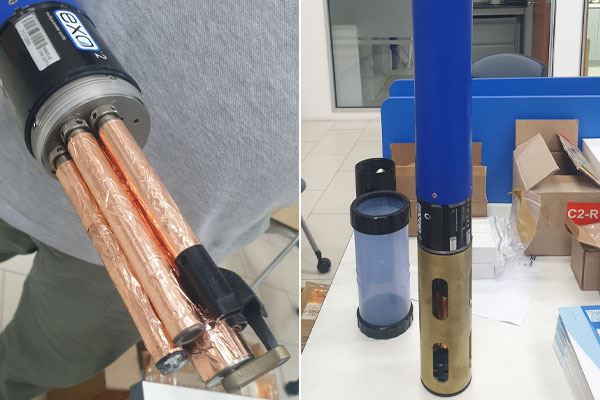
Five parameters — conductivity, temperature, salinity, pH, dissolved oxygen, and turbidity — were monitored using a YSI EXO2 with a central wiper to mitigate marine biofouling. Other anti-fouling measures were also used. For instance, the basic plastic sensor guard was replaced with a copper sensor guard, and the sensors were wrapped with copper tape. The sonde was deployed in self-logging mode from a DB600 buoy in one of the cages.
Learn more about anti-fouling strategies in our on-demand webinar: How anti-fouling works: Principles and practices in water quality monitoring
Field Observation
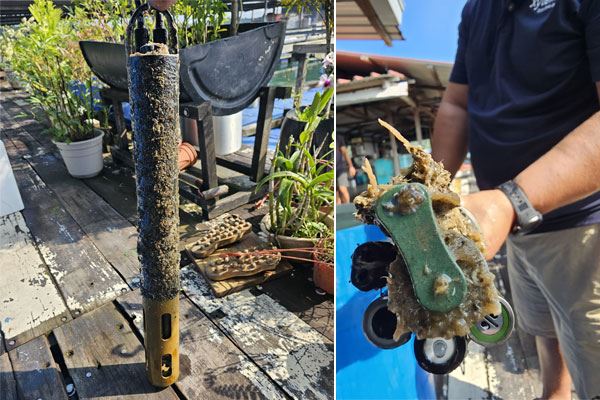
After 3 weeks of measurements, it was no surprise to see that the YSI sonde body had experienced heavy marine biofouling. The anti-fouling methods paid off. There was no marine biofouling inside or outside the copper sensor guard. The central wiper prevented any marine biofouling from occurring on the sensors.
Results
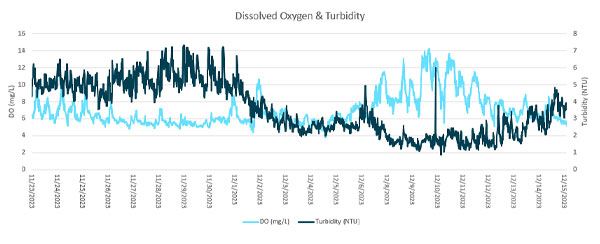
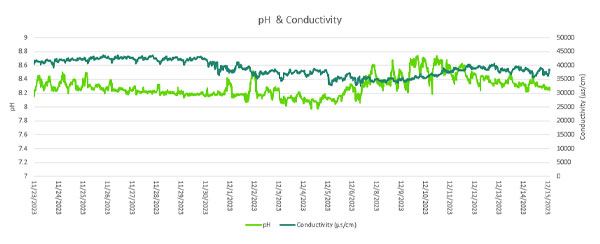
Data was analyzed for any performance deficiencies owing to sensor construction and the effects of marine fouling. Water quality results showed very few outliers from the overall data trend. This indicates good data quality. This is because the sensor is constructed using high-quality electronic components and a titanium housing, which help prevent water intrusion and damage. There were also no signs of data drift owing to marine fouling.